
Cape Town Port Turnaround: How 58-Hour Ship Calls Are Reshaping South Africa’s Marine Supply Chain
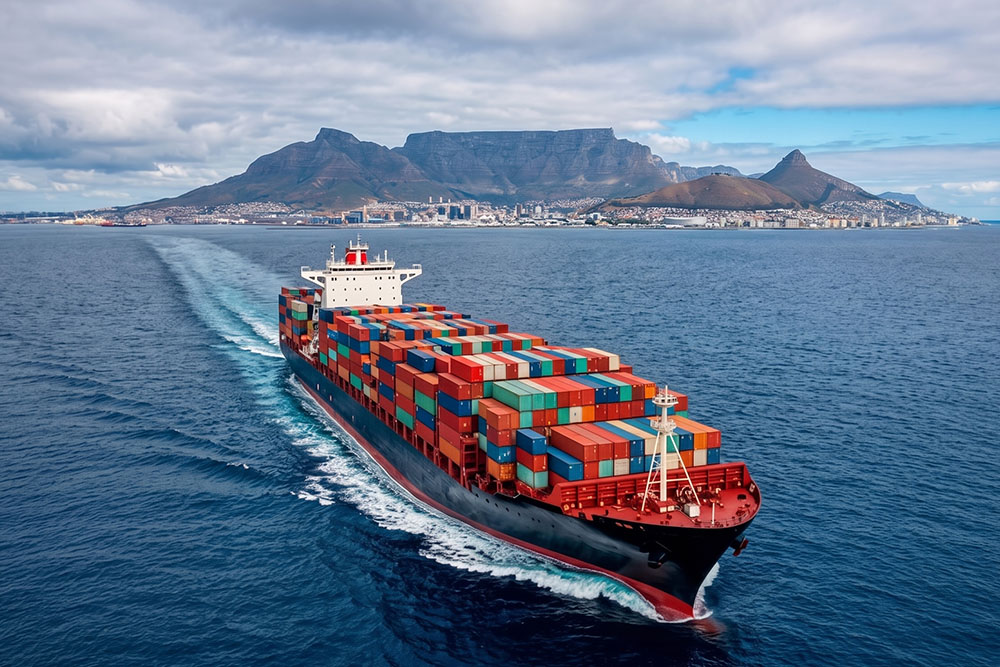
Cape Town Port Turnaround Times Improve For Vessel Operators
For much of the past decade, shipping through the Port of Cape Town demanded patience. Vessel operators, port agents, exporters and maritime service providers all learned to build extra time into their planning as congestion, weather disruptions and infrastructure constraints affected operations. Today, there are genuine signs that the tide is turning.
Container terminal Ship Turnaround Time (STAT) has improved from an average of 103 hours in the 2023/24 financial year to just 58 hours year-to-date in 2026/27, reflecting consistent year-on-year gains rather than a once-off improvement.
For South Africa’s maritime sector, these gains represent far more than encouraging operational statistics. Every hour saved alongside has the potential to improve scheduling certainty, reduce operational friction and strengthen confidence across the wider supply chain.
This matters because shipping has always operated on predictability as much as speed. When vessels can rely on more consistent port performance, everyone from cargo owners to marine suppliers can plan with greater confidence.
What Has Changed At The Port?
The improvements seen at the Port of Cape Town have not come from a single intervention. Instead, they reflect a combination of targeted infrastructure investment, operational refinements and stronger collaboration between Transnet National Ports Authority (TNPA) and industry stakeholders.
According to TNPA, improved terminal handling rates and the elimination of marine-related delays have played an important role in reducing vessel turnaround times. One of the most significant investments has been the permanent deployment of ten shore tension units at the Cape Town Container Terminal. These systems stabilise vessels during long-wave conditions, reducing one of the port’s most persistent operational challenges. Since the 2023/24 financial year, they have reduced long-wave-related downtime by an impressive 92%.
Private sector participation is also gathering momentum. Nine of the port’s eleven terminals are now privately operated, with additional requests for proposals planned for a multipurpose terminal and a floating dock facility that will expand South Africa’s ship repair capacity.
These developments reinforce an important reality about modern ports. Sustainable improvements are rarely the result of one major project. They come from multiple operational gains working together, gradually improving the reliability of the entire system.
LEARN MORE: The Green Shipping Revolution Is Coming To Africa: What Ship Owners Need To Know
Hard Numbers Tell A Bigger Story
While shorter turnaround times are grabbing headlines, they are only one indicator of a port that appears to be gaining momentum.
During the 2025/26 financial year, container volumes increased by 6.5%, supported by record deep-sea import and export performance. Liquid bulk volumes grew by 10.3%, driven by higher petroleum imports and strong coastwise exports, while break bulk volumes climbed by 25.5% year on year.
Another encouraging statistic is the reduction in average anchorage waiting times, which have fallen from 127 hours to 79 hours. Less time waiting offshore means better berth utilisation, more dependable sailing schedules and improved planning opportunities for everyone involved in servicing a vessel during its port call.
Interestingly, dry bulk volumes declined by 42.8%, but not because of weaker operational performance. Improved local harvests and greater domestic grain availability reduced the Western Cape’s reliance on imported maize and barley. It’s a reminder that cargo trends often reflect changing market conditions just as much as port efficiency.
Taken together, these figures paint a picture of a port that is becoming progressively more reliable, even while broader improvements continue.
Fast Facts
| Ship Turnaround Time (STAT) | 103 hrs | 74 hrs | 58 hrs |
| Anchorage Waiting Time | 127 hrs | 79 hrs | N/A |
| Container Volumes | — | +6.5% | Tracking higher |
| Liquid Bulk Volumes | — | +10.3% | Tracking higher |
The Ripple Effects Extend Well Beyond Cape Town
These improvements matter because ports do not operate in isolation. Every gain in operational reliability creates opportunities elsewhere in the logistics chain.
As we explored in our recent look at South Africa’s evolving logistics landscape, the country’s freight network is showing encouraging signs of stabilisation. Rail performance has begun recovering in key corridors, equipment availability is improving, and greater power stability is reducing interruptions for terminals, cold storage facilities and warehouses.
On their own, none of these developments signals a complete turnaround. Together, however, they reduce friction throughout the system. For shipping companies, that means greater confidence when planning coastal schedules.
Exporters benefit from more dependable shipping windows, while port agents and service providers have fewer last-minute operational surprises to contend with. Operational reliability improves at the margins, but in shipping, those margins matter.
ALSO SEE: South Africa Still Anchors Global Shipping Routes In 2026 And Beyond (Here’s Why)
Faster Calls Create New Demands For Marine Service Providers
Improving Cape Town Port efficiency creates welcome opportunities for the maritime sector, but it also changes the pace at which services must be delivered.
When vessels routinely spent several days alongside, suppliers often had more room to accommodate changing orders, delayed access or a second delivery. A 58-hour call leaves far less margin for error. Provisioning, bonded stores, technical supplies and other essential services must be coordinated within a tighter and more clearly defined window.
This is where accurate communication between the vessel, agent and local supplier becomes essential. Delivery teams need up-to-date berthing information, complete order details and a clear understanding of any access or compliance requirements. The earlier these elements are aligned, the easier it becomes to deliver the right supplies at the right time.
Greater schedule reliability also improves stock planning. Ship chandlers can allocate products, transport and personnel with more certainty instead of holding resources in reserve for repeatedly shifting port calls. This can reduce unnecessary handling, limit waste and support a more responsive service.
These operational realities explain why dependable ship supply services Cape Town are becoming even more important as port performance improves. Faster turnaround rewards suppliers that understand the rhythm of the harbour and can adapt quickly when vessel requirements change.
An Example Of What A Shorter Call Could Mean
Consider an illustrative scenario involving a refrigerated cargo vessel arriving during the Western Cape export season.
Under previous conditions, the vessel might have waited several days at anchorage before securing a berth. Provisioning arrangements would remain tentative throughout that period, with fresh supplies, transport and delivery personnel potentially needing to be rescheduled more than once.
With a more dependable arrival and departure window, the vessel’s local agent can confirm requirements earlier. The ship chandler can prepare provisions closer to delivery, protect cold-chain integrity and coordinate transport more precisely. The crew receives what it needs without adding unnecessary time to the vessel’s stay.
The value lies in more than the hours saved at berth. Greater certainty reduces avoidable rescheduling, allows resources to be used more efficiently and helps the vessel remain on track for its next port call.
READ NEXT: SOE Reform And The Shipping Outlook As Transnet Charts A New Course
How Link Ship Chandlers Is Responding
At Link Ship Chandlers, we see how changes in port performance affect maritime supply operations at ground level. Shorter calls place greater emphasis on preparation. Our role is to work closely with vessels and their appointed agents to understand requirements, coordinate deliveries and respond to the practical demands of each port call.
That may include provisions for the crew, bonded stores, deck and engine supplies, cabin products or other operational necessities. Whatever the order contains, timing remains central. Supplies must reach the vessel while access is available and without disrupting an already compressed working schedule.
Our experience supporting vessels in Cape Town, Saldanha Bay, Gqeberha, Coega, Durban, Richards Bay and East London also gives us a broader view of how improvements at one port influence the wider coastline. More dependable Cape Town calls can support better coastal planning, reduce schedule disruption and help vessels coordinate subsequent calls with greater confidence.
Previous investment at the Cape Town Container Terminal is now feeding into this progress. The new rubber-tyred gantry cranes form part of a planned fleet of 28 machines and include anti-sway technology designed for safe handling in winds of up to 90 km/h.
Longer-term plans include increasing terminal capacity from one million to 1.4 million twenty-foot equivalent units, adding seven ship-to-shore cranes and expanding refrigerated-container capacity. These developments are particularly significant for the Western Cape’s fruit, wine and agricultural export sectors.
Together with the reduction in vessel delays Cape Town has recently recorded, these investments suggest that operational improvements are beginning to translate into measurable results.
A Stronger Port Still Requires Sustained Progress
The latest figures deserve recognition, but they should be viewed with measured optimism. South Africa’s logistics network still carries infrastructure backlogs, and performance remains vulnerable to equipment failures, extreme weather and wider supply-chain disruption.
As Link Ship Chandlers has previously noted, the country has entered a period of stabilisation and partial recovery rather than reaching the end of its logistics challenges. Even so, the improvement from 103-hour to 58-hour ship calls is meaningful. It gives vessels clearer operating windows, supports more reliable cargo movement and allows marine service providers to plan with greater precision.
This progress also creates momentum beyond Cape Town. Better-performing ports strengthen exporter confidence, improve the reputation of South Africa’s maritime network and raise expectations for service delivery across the coastline.
Plan Your Next Cape Town Port Call With Confidence
As port stays become shorter and schedules more precise, having an experienced local supply partner becomes increasingly valuable.
Contact Link Ship Chandlers before your next Cape Town call to discuss your vessel’s provisioning, bonded-store and technical-supply requirements. With the right preparation in place, a tighter turnaround window can become an operational advantage rather than another source of pressure.


Leave a Reply