
The Hidden Costs of Shipping Delays: Why Efficient Ship Chandling Matters More Than Ever
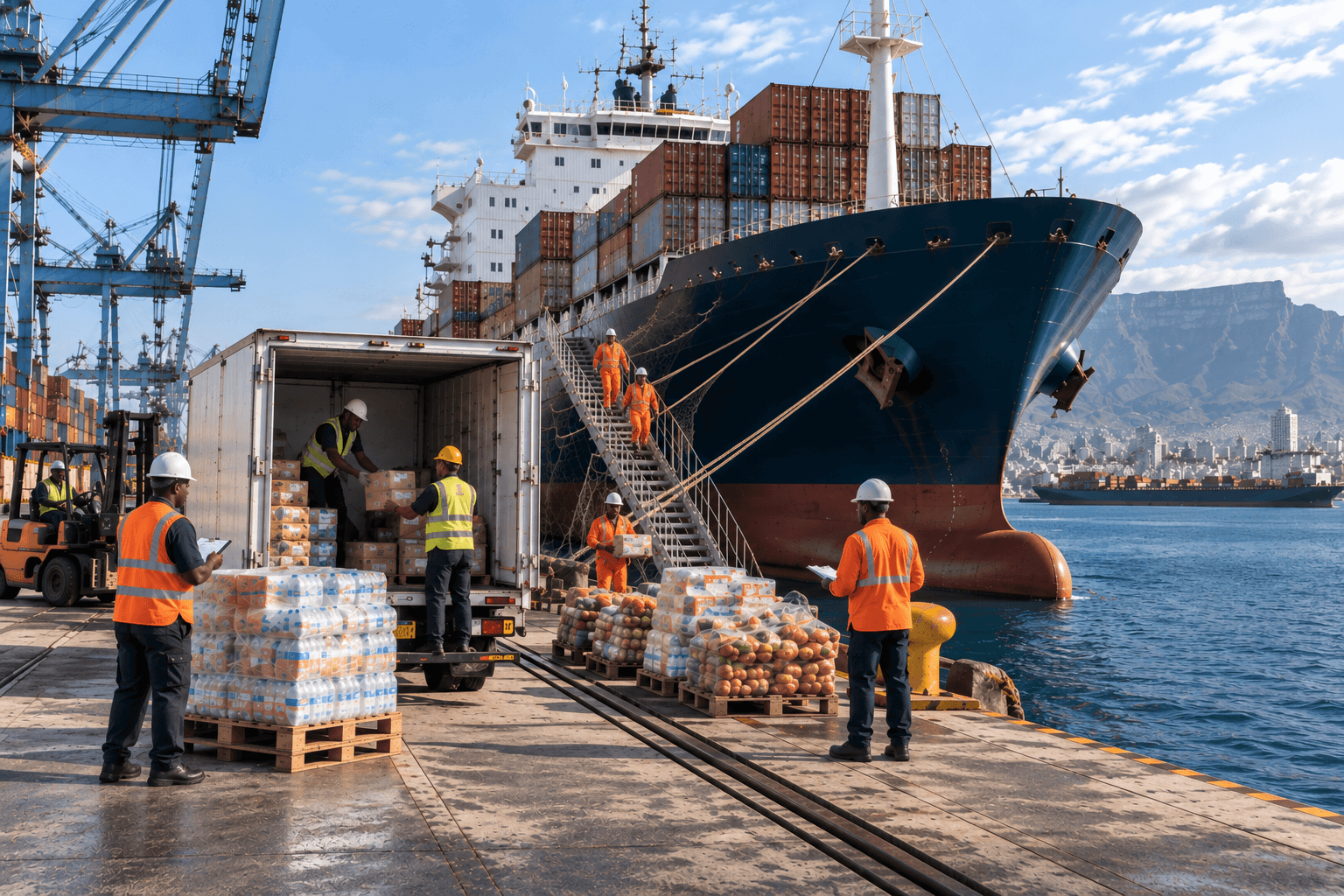
Hidden Costs of Shipping Delays
A vessel’s schedule rarely changes in isolation. A delayed berth can shift cargo operations, crew arrangements, planned maintenance and vessel provisioning. The next voyage may still have commitments of its own, leaving the vessel and its shoreside partners to adjust several plans at once.
For ship owners and operators, the cost is therefore wider than the hours spent waiting. Supplies ordered against an expected arrival time still need to reach the vessel when it can receive them. If that window moves or narrows, preparation and communication become critical.
South African Ports Are Changing
South African ports have faced congestion, equipment challenges and weather-related disruption. Cape Town’s recent performance also shows measurable progress.
According to figures reported by Transnet National Ports Authority (TNPA), container-terminal ship turnaround time at Cape Town fell from an average of 103 hours in 2023/24 to 83 hours in 2024/25 and 74 hours in 2025/26.
It averaged 58 hours year-to-date in 2026/27 when TNPA reported the figures in July 2026. Average waiting time at anchorage, a separate measure, fell from 127 hours in 2023/24 to 79 hours in 2025/26.
The improvements have a practical basis. TNPA reported that ten permanently deployed shore tension units at the Cape Town Container Terminal had reduced downtime associated with long-wave conditions by 92% since 2023/24. Improved terminal handling also contributed to the reported gains.
These figures do not mean that every vessel now follows a predictable timetable. They do show why suppliers need to keep pace with a port whose operations are changing.
READ NEXT: South Africa’s Ship Repair Revival Is Gathering Momentum
What Changing Schedules Mean for Ship Supplies
A longer wait at anchorage can change what a vessel needs before it sails. The crew may require additional fresh or frozen provisions and everyday consumables. An earlier berth or quicker cargo operation creates a different challenge: the vessel may have less time alongside to receive an order already in progress.
For teams arranging ship supplies South Africa-wide, the useful question is not simply, “When is the vessel due?” It is also, “What does it need now, and when can those goods be delivered?” The answer may cover food, bonded stores where applicable, deck and engine stores, cabin supplies or safety equipment. A revised order calls for clear agreement on priorities, quantities and the delivery window.
The details will differ between a call at Saldanha and one at Port Elizabeth or Coega. In every case, the chandler must work from the vessel’s current requirements rather than an arrival estimate that has already changed.
Cape Town illustrates why plans must remain flexible. During a 2025 oversight visit, Parliament noted equipment breakdowns and adverse weather among the port’s operational challenges, alongside interventions to improve performance.
LEARN MORE: How 58-Hour Ship Calls Are Reshaping South Africa’s Marine Supply Chain
Why Chandling Efficiency Matters
Efficient ship supply services depend on more than moving an order quickly. The chandler needs accurate updates from the vessel or its representative, reliable sourcing, careful order preparation, and a delivery plan matched to the vessel’s actual movements.
That means confirming a change before preparing the wrong quantities, checking that requested items are available and suitable, and identifying anything essential before departure. Fresh and frozen provisions need appropriate handling; a missing deck or engine-store item presents a different problem. Both can complicate a tight port call if discovered too late.
Local procedures matter as well. Deliveries must be coordinated within the port’s access and operational arrangements, while the vessel may be occupied with cargo work or other services. Good communication helps everyone work to the same updated plan.
Efficient ship chandling cannot eliminate port delays, but it can help prevent vessel supply from becoming another source of delay.
Faster Ports Need Responsive Suppliers
Cape Town’s improvement gives this discussion a more immediate dimension. Reporting in August 2026 put average vessel waiting time at 44.3 hours and container-terminal turnaround at approximately 55 hours year to date. The report also described preparations ahead of the fruit export season, including equipment and infrastructure measures.
The July and August figures are snapshots from different reporting dates. Their shared message for suppliers is clear: a long stay cannot be treated as a dependable buffer for sourcing and delivery.
A shorter average turnaround does not mean every ship has the same time alongside. It does mean that marine supplies South Africa operators must be prepared for the possibility of a changing, sometimes narrower window. If cargo work finishes sooner than expected, an outstanding order cannot rely on the vessel remaining in port for several more days. If an arrival slips, the order may need updating before it is delivered.
This is where responsive chandling supports the progress being made at the port. The supplier cannot determine the berthing time or speed up terminal operations. It can stay in contact, prepare accurately, and coordinate delivery so required stores are ready when the vessel can receive them.
ALSO SEE: The Green Shipping Revolution Is Coming To Africa (What Ship Owners Need To Know)
Choosing a Ship Chandler for a Changing Schedule
When assessing ship chandlers in South Africa, operators should look for clear answers: Can the supplier confirm what it can source? Will it check changes to the order promptly? Does it understand local delivery arrangements and keep the vessel’s representative informed? Can it prepare and deliver the right goods within the available window?
Those questions matter whether the next call is at Durban, Richards Bay, or East London. A dependable chandling partner helps turn an updated schedule into a workable supply plan.
At Link Ship Chandlers, we understand that port calls can change. Contact us to discuss your upcoming call and the vessel supplies you need, and we’ll help coordinate your order around the time available.


Leave a Reply